
The record, 1945 to now
A party built on one sentence.
Most Philippine parties are built around a candidate. They dissolve when the candidate does.
This one was built around an argument. The argument was made by a trial judge from Iloilo who had already spent a decade proving it in three branches of government before she asked anyone for a vote.
Before the party
The judge’s daughter.
She was born in Iloilo City in 1945, the eldest of seven, to a judge and a college dean. Law was the family trade.
She was good at it in a way that left a paper trail. Valedictorian in grade school, in high school, and again as an undergraduate. Magna cum laude at UP Iloilo, then UP Law in Diliman, where she became the first woman to edit The Philippine Collegian.
Then she left. A master of laws and a doctorate from Michigan. Fellowships at Oxford and Cambridge. A post as legal officer for the UN refugee agency in Geneva.
She gave up Geneva and came home when her father fell ill. It is the first of several points in this story where she took the harder option without appearing to think about it very long.
In 1983 she was made a trial judge in Quezon City, the youngest on the Metro Manila bench. She cleared about fifty cases a month, more than anyone else in the capital, by the simple and deeply unpopular method of refusing to grant postponements.
When the Marcos government claimed it could hold student activists indefinitely without bail, she ordered the military to let them post it.
Corazon Aquino made her Commissioner of Immigration in January 1988. The bureau was a byword for graft. She said so out loud, called the country the fake passport capital of the world, and started raiding the syndicates behind the trade.
The threats on her life were serious and constant. Her answer to them, delivered flat, is still the most quoted thing she said before she entered politics.
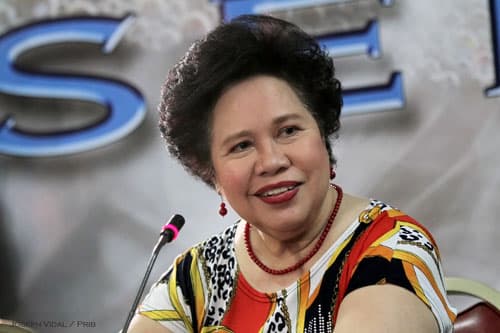
At a press forum on her priority bills.
Joseph Vidal / Senate PRIB. Public domain (RA 8293 s.176).
I eat death threats for breakfast
1990 to 1992
One proposition, and no machine.
The Magsaysay Award in 1988 cited her for “bold and moral leadership in cleaning up a graft-ridden government agency.” That sentence is, in effect, the party’s founding document.
By February 1990 she had decided to run for president. On April 12, 1991 the People’s Reform Party was registered to carry it.
What it did not have was money, a dynasty, or a provincial machine. The 1992 campaign was run substantially by university students walking house to house.
In April 1991 she was badly hurt in a road crash while campaigning. She believed it was an attempt on her life and received the last rites. She was back on the road within two months.
She led the canvass for five days. Then came a run of nationwide power outages, and when the count resumed Fidel Ramos was ahead.
The final margin was about 874,000 votes out of roughly 23 million. In Western Visayas, where people had known her longest, she took 98 per cent. Newsweek ran the two of them under the headline “Was the Election Fair?”
She filed a protest. It was never heard on the facts. In 1996 the tribunal dismissed it as moot, reasoning that by taking her oath as a senator she had given up the claim.
Her own account of 1992 never changed afterwards.
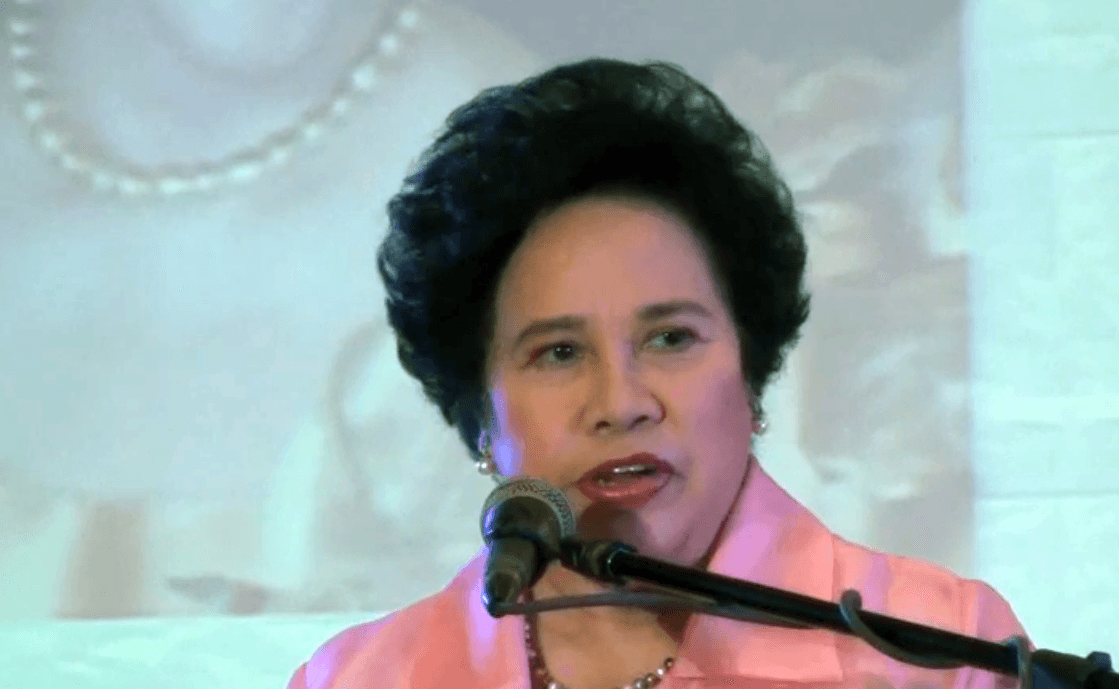
Speaking at the Crowne Plaza. The voice did most of the work.
Dane Alegana. CC BY 2.0.
I won in the election, but lost in the counting
1995 to 2014
One senator, drafting law.
Losing the presidency settled what the party would actually be. It was never going to be the largest bloc in the chamber.
What it had was one legislator who could draft, who read the whole bill, and who could not be bought at any price anyone was willing to name out loud. For twenty years that was enough to put real law on the books.
The Renewable Energy Act in 2008 was the first Philippine law to put financing and incentives behind a move off coal and oil.
The Climate Change Act in 2009 created the Climate Change Commission and made adaptation national policy. For a country sitting in the Pacific typhoon belt, that is not a theoretical matter.
The Reproductive Health Act passed in 2012, after more than a decade of obstruction.
She filed the first version of what became the SOGIE Equality Bill in 2000, the first senator ever to do it. She refiled it for the rest of her career and never got it passed.
In December 2011 she was elected a judge of the International Criminal Court, the first Asian from a developing country to hold the office. Her health stopped her from ever taking the seat.
The clearest illustration of what she was for came in December 2012. She disclosed that the Senate President had handed every senator but three a two-million-peso cash gift out of Senate funds.
She was one of the three who had not taken it. That disclosure opened the pork barrel scandal that followed.
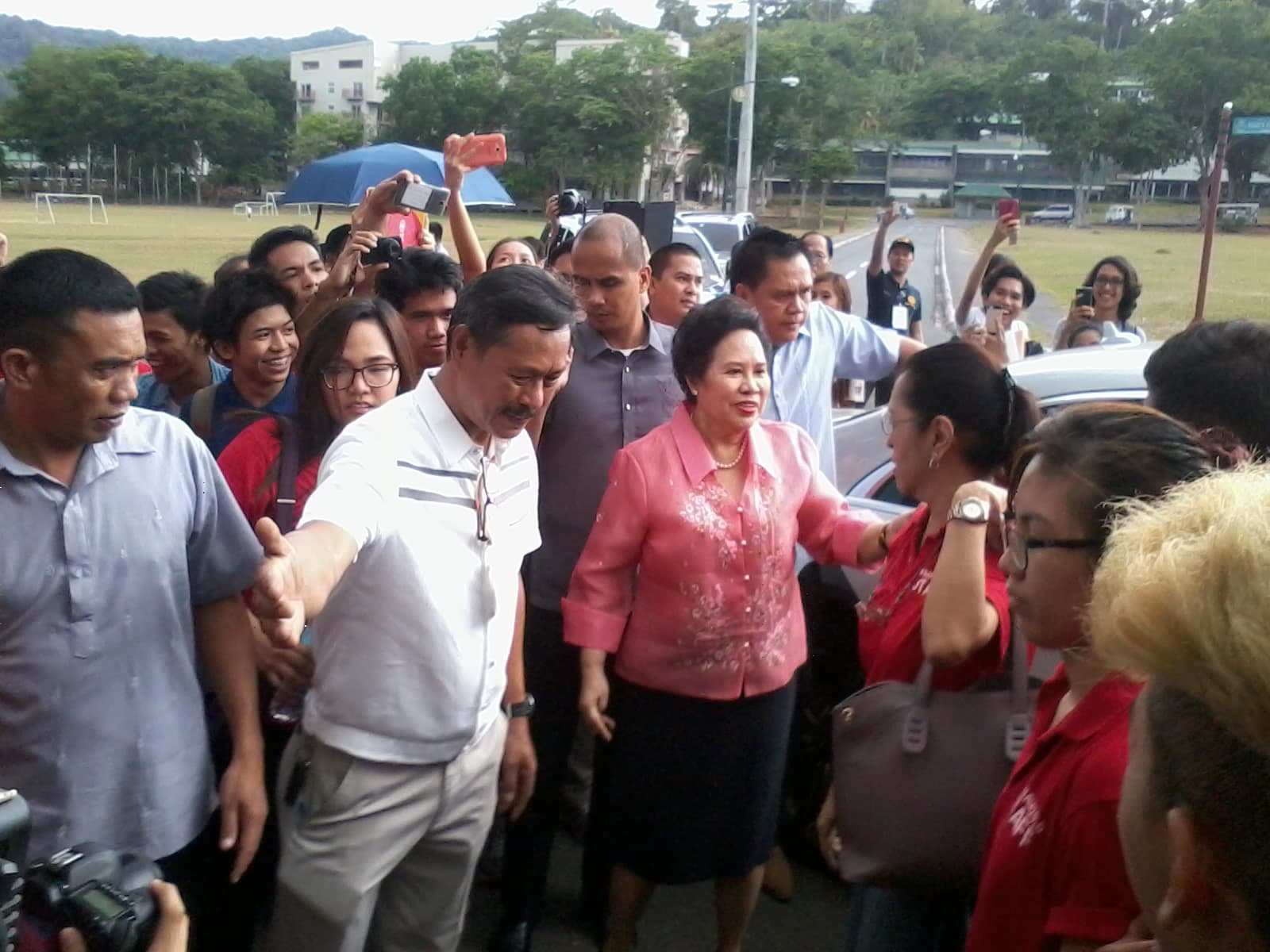
UP Los Baños, 27 April 2016. Two weeks before her last election, and already ill.
Ian Lopez. CC0.
Every contest the party has entered
Three presidential campaigns and seven Senate cycles, won and lost, with the numbers as they were recorded.
| Year | Votes | Share | Outcome |
|---|---|---|---|
| 1992 | 4,468,173 | 19.72% | Second place. Lost to Fidel Ramos. |
| 1998 | 797,206 | 2.96% | Lost to Joseph Estrada. |
| 2016 | 1,455,532 | 3.42% | Fifth place. Lost to Rodrigo Duterte. |
| Year | Seats | Ticket |
|---|---|---|
| 1992 | 0 of 24 | Ran alone |
| 1995 | 1 of 12 | Split ticket with NPC |
| 2001 | 0 of 13 | Puwersa ng Masa |
| 2004 | 1 of 12 | K-4 coalition |
| 2010 | 1 of 12 | Nacionalista ticket |
| 2019 | — | Did not field a Senate slate |
| 2022 | 0 of 12 | UniTeam |
2015 to 2018
The last campaign.
In October 2015, with lung cancer she said her doctors had stabilised, she announced a third run for the presidency.
The campaign was built on the youth vote and run largely online. She won university straw polls by margins nobody else came near.
On election day she finished fifth, with 3.42 per cent. She told her supporters to cheer up.
She died on the morning of 29 September 2016, aged 71. Her husband gave her last words as: “I accept this. I do not want to do anything heroic.”
Iloilo City declared a day of mourning and flew the flag at half mast for nearly three weeks.
In 2018 she was given the Quezon Service Cross, the highest honour the Republic confers. She was the sixth person ever to receive it and the only woman.
The phrase that attached itself to her after 2016, and has not come off, is the greatest president we never had.

Quezon City, 2023. Agham Road was renamed for her by Republic Act 11963.
Public domain.
Since
The argument outlives the arguer.
Narciso Santiago Jr. became party president in 2016. The party has gone on contesting national elections and organising locally.
In 2026 it restated its position plainly. It condemns corruption and abuse of power, and it stands with the people harmed by both.
The founding proposition has not changed. Corruption is a culture, and cultures can be reformed.
Neither has the fact that the work is unfinished, which is the only honest reason to ask anyone to join anything.
Every date, in order
The timeline.
Twenty-seven entries from 1945 to 2026. Jump to a period, or open any entry to read it.
1945–1989
Iloilo
Miriam Palma Defensor is born on June 15 in Iloilo City, the eldest of seven. Her father is a judge, her mother a college dean. She is class valedictorian in grade school, in high school, and again as an undergraduate.
The Collegian
Political science, magna cum laude, at the University of the Philippines in Iloilo, then UP College of Law in Diliman. She becomes the first woman to edit The Philippine Collegian.
Michigan, Oxford, Cambridge
A master of laws and a doctorate in juridical science from the University of Michigan, then research fellowships at St Hilda’s College, Oxford, and the Lauterpacht Centre for International Law at Cambridge. She also works as a legal officer for the UN High Commissioner for Refugees in Geneva, and resigns to come home when her father falls ill.
The bench
Appointed to the Regional Trial Court in Quezon City, the youngest judge in Metro Manila. She disposes of more cases than anyone else in the capital, roughly fifty a month, by refusing postponements. When the Marcos government claims the power to hold student activists indefinitely without bail, she orders the military to let them post it.
January“The fake passport capital of the world”
Corazon Aquino appoints her Commissioner of Immigration. She says out loud what the trade already knew, calls the country the fake passport capital of the world, and starts raiding the syndicates behind it, the Yakuza included. The death threats arrive quickly. Her answer becomes famous: “I eat death threats for breakfast.”
AugustThe Magsaysay Award
The Ramon Magsaysay Award cites her for “bold and moral leadership in cleaning up a graft-ridden government agency.” It is the credential the whole party is later built on.
Agrarian reform
Promoted to Secretary of Agrarian Reform and chair of the executive committee of the Presidential Agrarian Reform Council. She holds the post until January 1990, then returns to private life.
1990–1992
She decides to run
On February 19 she confirms she will run for president. She has no machine, no dynasty and no money worth the name.
April 12The People’s Reform Party is founded
The party is registered on one proposition: that corruption is a culture rather than a run of bad officials, and that cultures can be reformed. “Our task is to reform the culture of corruption.” The campaign is run largely by university students going house to house, because there is not the money to run it any other way.
April 28The crash
She is badly injured in a road crash while campaigning and believes it was an attempt on her life. A priest administers the last rites. She is back on the road inside two months.
May 11Kay Miriam Kami!
She leads the canvass for five days. Then a run of nationwide power outages, and when the count resumes Fidel Ramos is ahead. Final tally: Ramos 5,342,521, Santiago 4,468,173. A gap of about 874,000 votes out of some 23 million. In her own Western Visayas she takes 98 per cent. Newsweek runs the pair of them under the headline “Was the Election Fair?”
AfterThe protest
She files an electoral protest citing the outages as evidence of fraud. It is never heard on the facts. In February 1996 the tribunal dismisses it as moot, holding that by taking her oath as a senator she had abandoned the claim to the presidency. Her verdict on 1992 does not change for the rest of her life: “I won in the election, but lost in the counting.”
1995–2014
Into the Senate
She wins a Senate seat and the party finds its actual method. Never the largest bloc, never the machine: one legislator, drafting law, and a reputation that made her hard to buy and harder to ignore.
A second run
A second campaign for the presidency draws 797,206 votes. The party does not dissolve into the winning coalition afterwards, which is the entire difference between it and most Philippine parties of the period.
The first anti-discrimination bill
She files the first version of what becomes the SOGIE Equality Bill, the first Philippine senator to do so. She refiles it, and refiles it, for the rest of her career.
Back in
Re-elected. The run of legislation the party is still known for starts here.
Renewable Energy Act
The first Philippine law to put real financing and incentives behind a shift away from coal and oil.
Climate Change Act
Creates the Climate Change Commission and makes adaptation national policy rather than a department memo. For a country in the path of the Pacific typhoon belt, this is not an abstraction.
A third term
Returned to the Senate, third place, more than fifteen million votes.
The International Criminal Court
Elected a judge of the ICC in December, 79 votes in the first round, the first Asian from a developing country to hold the office. She defers her oath on health grounds and resigns in June 2014 without ever sitting.
DecemberReproductive Health Act, and the pork barrel
After more than a decade of obstruction the Reproductive Health Act passes, co-authored with Pia Cayetano. The same month she reveals that the Senate President had handed every senator but three a two-million-peso cash gift out of Senate funds. She was one of the three. The disclosure opens the pork barrel scandal that follows.
Stupid is Forever
She publishes a collection of her own jokes and put-downs and it becomes a national bestseller. It is not a footnote: it is how a generation who never watched a Senate hearing came to know exactly who she was.
2015–2018
Si Miriam ang Sagot
On October 13, with lung cancer she says her doctors have stabilised, she announces a third run for the presidency. The campaign is built almost entirely on the youth vote and on social media, and she wins university straw polls by margins nobody else comes close to.
MayThe last count
She finishes fifth with 3.42 per cent. She tells her supporters to cheer up. The phrase that attaches itself to her afterwards is “the greatest president we never had.”
September 29Her death
She dies in her sleep at 8:52 in the morning at St Luke’s in Taguig, aged 71. Her husband gives her last words as: “I accept this. I do not want to do anything heroic.” Iloilo City declares a day of mourning and flies the flag at half mast for nearly three weeks. She is buried on October 2 at Loyola Memorial Park in Marikina, beside her son Alexander.
The Quezon Service Cross
Conferred posthumously on December 3. It is the highest honour the Republic gives. She is the sixth person ever to receive it and the only woman.
2016–now
FromSuccession
Narciso Santiago Jr. becomes party president. The party continues to contest national elections and to organise locally.
Her name on the map
Republic Act 11963 renames Agham Road in Quezon City as Senator Miriam P. Defensor Santiago Avenue.
The position today
The party publicly condemns corruption and abuse of power and commits its support to the people harmed by both. The founding proposition has not changed, and neither has the fact that it is unfinished.
You have read the record.
The next part of it is not written yet. Applicants complete party training before they go on the rolls.
Apply for membership